For new restaurants
A restaurant pays for its kitchen, its permits and its first payroll before it sells a single plate.
Opening costs land before opening day: buildout, equipment, permits, opening inventory and training payroll. This page covers what SBA describes for new businesses, and why ROK fits after you open. The Business Funding Club is a free referral club, not a lender.
A referral club, free to apply. ROK Financial and its lenders review every request and make all funding decisions. How we’re compensated.
Prefer to go straight to the funder? You can apply on ROK's own site. It carries our referral ID.
The math
The math
- BUILDOUT
You build and equip
Construction, kitchen equipment, furniture and deposits come first, often months before opening.
- OPENING WEEK
You stock and train
Opening inventory and training payroll go out before the first ticket prints.
- AFTER OPENING
Sales start
Card and cash sales begin, and every day of deposits builds the record a lender will read.
Every restaurant opens with a stretch of costs and no sales. Planning that stretch, and keeping clean records once sales start, is what makes the next round of financing possible.

By Marcus L. Barber, Publisher · Reviewed by Marcus before publishing · Updated · How we write and check facts
What you pay before the first sale
Our restaurants page covers financing for operating restaurants and bars. This page is about opening one.
- Buildout: plumbing, ventilation, electrical and the dining room.
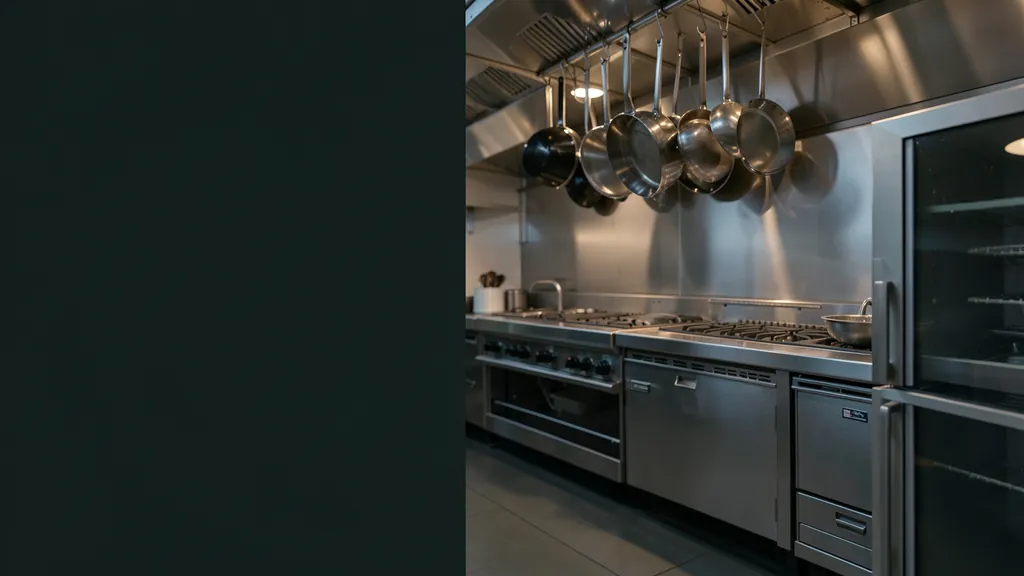
- Kitchen equipment: ranges, hoods, refrigeration and dish.
- Furniture and fixtures: tables, seating, the bar and the point-of-sale system.
- Permits and inspections from your local health and building departments.
- Opening inventory: food, beverage and paper goods.
- Training payroll for the staff you hire before you open.
- Deposits on the lease and utilities.
Put a dollar figure and a date next to each line. A plan that shows when each cost lands is the first thing any lender or program will ask to see.
What SBA describes for new businesses
SBA's 7(a) program lists starting a business among its uses[1]. 7(a) loans can be used for working capital, machinery and equipment, furniture and fixtures, and buying or improving real estate[2]. You apply through a local lender, and you work with the lender, not with SBA[2]. Our SBA loans page explains the program.
SBA microloans are smaller loans that help small businesses start up and expand. They are made through intermediary lenders, which are nonprofit community-based organizations[3]. They can be used for working capital, inventory, supplies, furniture, fixtures, machinery and equipment, but not to pay existing debts or buy real estate[3]. The intermediary lenders make the credit decisions and set the terms[3].
Expect to bring a business plan. SBA's rules list a business plan, when applicable, among the contents of a loan application[4], and SBA says most lenders expect one for startup funding[5].
For kitchen equipment, see equipment financing. ROK describes equipment financing as a loan or lease usable for almost any tangible business asset[6].
What to keep from your first months
The first months of sales are what turn a new restaurant into one a funder can read. Keep these from opening day:
- A separate business bank account, with every deposit and every supplier payment running through it.
- Daily sales reports from your point-of-sale system.
- Card processor statements, month by month.
- Supplier invoices for food, beverage and supplies.
- Payroll records and tip reports.
- Your lease, permits and inspection reports, in one folder.
What ROK will want to see from a new restaurant
ROK's partner application lists at least 4 months in business and at least $10,000 in monthly gross sales[7]. ROK's listed minimums assume an operating business[8,7]. Before opening, SBA's programs and a local lender are the usual first conversations. After opening, your first months of deposits become the record ROK and its lenders read.
Lenders commonly look at credit history, cash flow, equity and collateral[1]. Credit is one input among several. Once you are past ROK's minimums, have these ready:
- Business bank statements for every month you have been open.
- Card processor statements and point-of-sale sales reports.
- Equipment quotes for anything you want to add.
- Your lease and current debts, including any startup loan.
ROK Financial and the lenders it matches you with make every funding decision. Our funding readiness guide lists the documents in more detail.
These are what lenders commonly review, not a promise of any outcome. The Club does not make funding decisions.
Financing that fits this kind of gap
Which one fits your business, if any, is a conversation to have with ROK’s advisor once they have seen your file. These are the types that usually come up.
- Equipment financingFor ranges, hoods and refrigeration. ROK describes equipment financing as a loan or lease usable for almost any tangible business asset[6].How it works
- SBA loansThe usual first conversation before opening. SBA's 7(a) program lists starting a business among its uses[1].How it works
- Business line of creditAfter opening, for inventory and payroll between slow and busy weeks, once the restaurant has a sales record.How it works
Related
Common questions
Can I get a restaurant startup loan with no sales yet?
From SBA's programs, possibly. SBA's 7(a) program lists starting a business among its uses[1], and microloans help small businesses start up and expand[3]. A lender makes each loan and decides. ROK's partner application lists minimums for time in business and monthly gross sales[7], so ROK fits after you open.
What can an SBA microloan pay for?
SBA lists working capital, inventory, supplies, furniture, fixtures, machinery and equipment[3]. Microloans cannot be used to pay existing debts or to buy real estate[3]. They are made through nonprofit community-based intermediary lenders, which make the credit decisions and set the terms[3].
Does an SBA loan come from SBA?
No. For 7(a), you apply through a local lender and work with the lender, not with SBA[2]. Microloans come from intermediary lenders that SBA funds[3]. SBA sets program rules, and the lenders make the loans. Our page on SBA 7(a) vs 504 compares the two main programs.
What records should a new restaurant keep?
Keep a separate business bank account, daily point-of-sale reports, card processor statements, supplier invoices, payroll and tip records, and your lease, permits and inspection reports. These records show a lender how the restaurant actually runs, which matters more than projections once you are open.
Is The Business Funding Club a lender?
No. The Business Funding Club is a referral service, not a lender and not a broker. We refer businesses that ask for capital to ROK Financial. ROK Financial pays the Club when a business the Club refers receives funding. There is no cost to your business, and nothing on this page is an offer of credit.
Sources
- SBA lender resources: Partnering with SBA loan programs U.S. Small Business Administration, checked October 16, 2026
- 7(a) loans U.S. Small Business Administration, checked October 16, 2026
- Microloans U.S. Small Business Administration, checked October 20, 2026
- 13 CFR 120.191: The contents of a business loan application U.S. Small Business Administration (regulation text via Cornell LII), checked October 16, 2026
- Lender Match connects you to lenders U.S. Small Business Administration, checked October 16, 2026
- Get Equipment Financing For Your Small Business ROK Financial, checked October 16, 2026
- Business Financing application (ROK Financial partner page) ROK Financial, checked October 16, 2026
- Franchise Financing ROK Financial, checked October 16, 2026
Before you start
What ROK looks for.
Stated plainly so you don’t spend time on a form that isn’t built for your business yet. These are the minimums ROK lists on its partner application. Meeting them is the starting line, not a decision.
- 4 monthsminimum time in business
- $10,000minimum monthly gross sales
- U.S.based and operating
Credit history is one input among several. ROK reviews the whole picture: revenue, deposits, time in business, and what the money is for. What to have ready.
A referral club, free to apply. ROK Financial and its lenders review every request and make all funding decisions. How we’re compensated.
Prefer to go straight to the funder? You can apply on ROK's own site. It carries our referral ID.
Plainly
What we are, and what we are not.
We are a referral club. We introduce small businesses to ROK Financial. That's the whole service, and it's free to you.
We are not a lender and not a broker. We don't fund anything, we don't quote figures, and we don't negotiate on your behalf. If someone tells you what your financing will look like before ROK has reviewed your file, that person is guessing.
We are paid by ROK, not by you. When a business we refer gets funded, ROK compensates us. You are never charged a membership fee or an application fee, by us or by anyone acting for us. Full disclosure here.