For dental practices
You did the crown today. The insurance payment comes weeks later.
A dental practice pays its team, its lab and its equipment as care is delivered, then waits on insurance carriers to pay their share of the claim. The Business Funding Club is a free referral club that sends practices to ROK Financial. ROK and the lenders it matches you with review each request and make every funding decision.
A referral club, free to apply. ROK Financial and its lenders review every request and make all funding decisions. How we’re compensated.
Prefer to go straight to the funder? You can apply on ROK's own site. It carries our referral ID.
The math
The math
- DAY 0
You deliver care
The chair time, the supplies and the team are already paid for. A dental hygienist's median annual wage was $98,100 in May 2025[1].
- CLAIM
You submit the claim
The patient pays their portion. The rest goes to the carrier as a claim, and only a clean claim, one with no defect or impropriety, gets the shortest clock[2].
- WEEKS LATER
The carrier pays
In Washington, for example, carriers must pay 95 percent of clean claims within 30 days, and pay or deny 95 percent of all claims within 60 days[2].
That lag is built into insurance-based dentistry. It is not a warning sign. It gets bigger as the practice grows: a new hygienist, a second doctor or longer hours all add payroll weeks before their claims are paid. Funding the gap is how a practice grows without starving the schedule.

By Marcus L. Barber, Publisher · Reviewed by Marcus before publishing · Updated · How we write and check facts
Where the cash goes in a practice
- Team payroll. Hygienists, assistants and front desk are paid every pay period, whatever the carriers have paid.
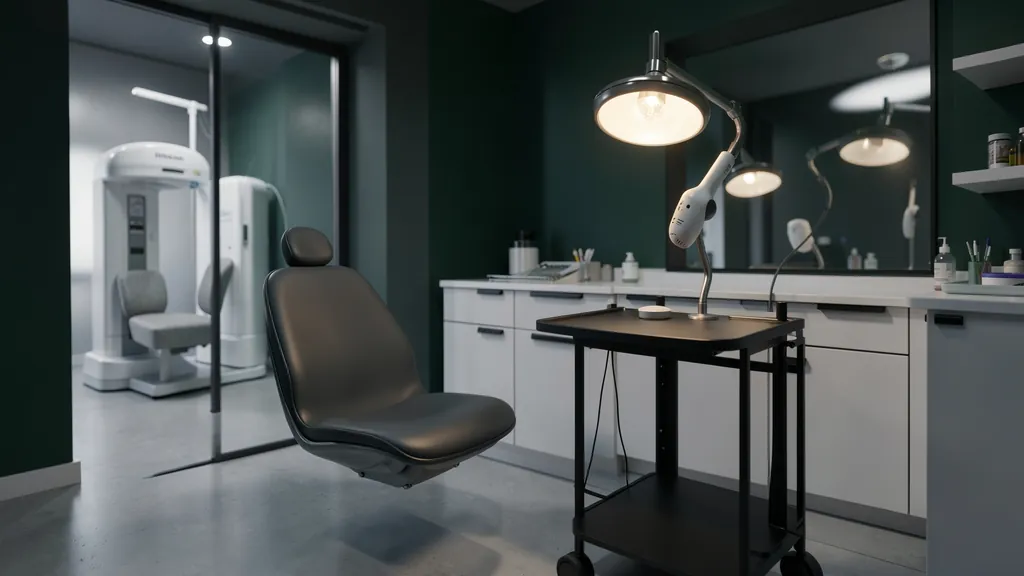
- Chairs and delivery units. Each new operatory needs a chair, a delivery system, a light and handpieces.
- Imaging. Dental cone-beam CT builds a 3D image with a cone-shaped X-ray beam and is used for work like implant planning and root canal diagnosis[3]. Intraoral scanners are often next on the list.
- Buildouts. New operatories, plumbing, cabinetry and a sterilization area, before the first patient sits down.
- An associate. A new dentist is paid from day one, while their schedule fills and their claims work through.
The practice model is changing too. The ADA Health Policy Institute reports that 72.5 percent of U.S. dentists were private practice owners in 2023, down from 84.7 percent in 2005, and that 16 percent were affiliated with a dental support organization in 2024[4]. Owners who stay independent are often the ones adding operatories and technology to compete.
Insurance timing: what the clean-claim rules cover, and what they don't
Washington's rule shows how a state payment window for clean claims works: 95 percent of clean claims paid within 30 days of receipt, and 95 percent of all claims paid or denied within 60 days[2]. A claim with a defect, or one that needs special handling, is not a clean claim[2].
Those rules do not reach every payer. The Washington State Dental Association notes that Medicare, Medicaid (Apple Health) and self-funded ERISA plans may be subject to different rules[5]. If a large share of your patients are on self-funded employer plans, plan around each carrier's real history, not the state's clock.
Check your own state
Prompt-payment rules differ by state and by plan type. Ask your state dental association or insurance department which rules apply to the carriers you bill most.
Equipment, buildouts and hiring
CBCT is not a casual purchase. The FDA regulates dental CBCT systems as medical devices that are also radiation-emitting electronic products[3]. Plan for the unit, the room and the training together. Ask your tax preparer about Section 179, which lets a business elect to deduct the cost of eligible equipment in the year it is placed in service instead of depreciating it, within IRS limits[6].
Hiring adds the same kind of gap. The Bureau of Labor Statistics projects employment of dental hygienists to grow 8 percent from 2025 to 2035, with about 15,000 openings a year, and 94 percent work in dentists' offices[1]. It projects about 4,800 openings a year for dentists over the same decade[7]. Dentists in private practice also handle bookkeeping and buying equipment and supplies[7], so the cash plan usually lands on the owner's desk.
What ROK will want to see
ROK's partner application lists at least 4 months in business and at least $10,000 in monthly gross sales, which is $120,000 a year[8]. Lenders commonly look at credit history, cash flow, equity and collateral[9]. For a practice, have these ready:
- Recent business bank statements.
- Production and collections reports from your practice management software.
- An insurance receivables aging by carrier.
- A vendor quote for any chair, CBCT unit, scanner or other equipment.
- For a buildout: the lease or letter of intent, and the contractor's bid.
- For a new associate or hygienist: the hire date and the schedule you expect them to fill.
Credit is one input among several. ROK and the lenders it matches you with review each request and make every decision. The Business Funding Club does not.
Before you sign anything, ask how payments are collected and whether there is a prepayment penalty. A practice that gets paid in claim batches should know how its payments line up with its deposits.
Financing that fits this kind of gap
Which one fits your business, if any, is a conversation to have with ROK’s advisor once they have seen your file. These are the types that usually come up.
- Equipment financingFor chairs, delivery units, CBCT, intraoral scanners and sterilization equipment. The equipment is part of the deal, so payroll cash is not tied up in it.How it works
- Business line of creditDraw to cover payroll and supplies while claims are out, then pay it down as carriers pay. It matches the claim cycle.How it works
- SBA loansFor bigger, longer projects like a full buildout, a second location or buying a practice, where a longer repayment schedule matters.How it works
- Commercial real estate financingFor buying the building you practice in instead of leasing it.How it works
Common questions
Can I finance a CBCT unit or an intraoral scanner?
Imaging and scanners are equipment, so equipment financing is the closest fit. Bring a vendor quote with the model and any install or room work. The FDA regulates dental CBCT as both a medical device and a radiation-emitting product, so plan the room and training with the purchase[3]. ROK and its lenders review the request and decide.
What do lenders look at for dental practice loans?
Lenders commonly look at credit history, cash flow, equity and collateral[9]. For a practice, production and collections reports, an insurance aging by carrier and recent bank statements show how dependable the cash is. ROK's partner application lists at least 4 months in business and $10,000 in monthly gross sales[8].
How long do dental insurance claims take to pay?
It depends on the state, the carrier and whether the claim is clean. Washington, for example, requires carriers to pay 95 percent of clean claims within 30 days[2]. Medicare, Medicaid and self-funded ERISA plans may follow different rules[5]. Your own aging report is the best guide.
Can financing help me hire an associate dentist?
An associate is paid from the first day, while their schedule fills and their claims are paid weeks later. A line of credit can carry that payroll gap. For a bigger expansion, like adding operatories for the associate, an SBA loan or term financing may fit better. ROK and its lenders review each request and decide what fits.
What does The Business Funding Club cost?
Nothing. The Business Funding Club is a free referral club. We are not a lender and not a broker. We send your application to ROK Financial. ROK and the lenders it matches you with review it and make every funding decision. If your practice is funded, ROK pays us a referral commission. You never pay the Club anything.
Sources
- Occupational Outlook Handbook: Dental Hygienists U.S. Bureau of Labor Statistics, checked October 16, 2026
- WAC 284-170-431, Provider contracts: Terms and conditions of payment Washington State Legislature, checked October 16, 2026
- Dental Cone-Beam Computed Tomography U.S. Food and Drug Administration, checked October 16, 2026
- Dental Practice Research American Dental Association Health Policy Institute, checked October 16, 2026
- Dealing with delayed dental claims: What Washington dentists should know Washington State Dental Association, checked October 16, 2026
- Publication 946 (2025), How To Depreciate Property Internal Revenue Service, checked October 16, 2026
- Occupational Outlook Handbook: Dentists U.S. Bureau of Labor Statistics, checked October 16, 2026
- Business Financing application (ROK Financial partner page) ROK Financial, checked October 16, 2026
- SBA lender resources: Partnering with SBA loan programs U.S. Small Business Administration, checked October 16, 2026
Before you start
What ROK looks for.
Stated plainly so you don’t spend time on a form that isn’t built for your business yet. These are the minimums ROK lists on its partner application. Meeting them is the starting line, not a decision.
- 4 monthsminimum time in business
- $10,000minimum monthly gross sales
- U.S.based and operating
Credit history is one input among several. ROK reviews the whole picture: revenue, deposits, time in business, and what the money is for. What to have ready.
A referral club, free to apply. ROK Financial and its lenders review every request and make all funding decisions. How we’re compensated.
Prefer to go straight to the funder? You can apply on ROK's own site. It carries our referral ID.
Plainly
What we are, and what we are not.
We are a referral club. We introduce small businesses to ROK Financial. That's the whole service, and it's free to you.
We are not a lender and not a broker. We don't fund anything, we don't quote figures, and we don't negotiate on your behalf. If someone tells you what your financing will look like before ROK has reviewed your file, that person is guessing.
We are paid by ROK, not by you. When a business we refer gets funded, ROK compensates us. You are never charged a membership fee or an application fee, by us or by anyone acting for us. Full disclosure here.