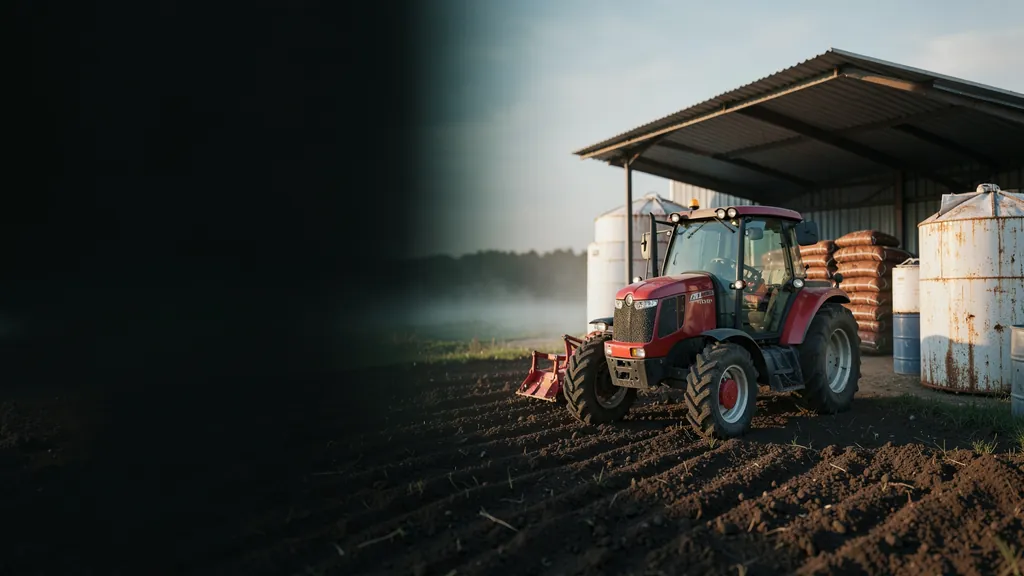
For beginning farmers
Starting a farm means paying for a season before you have sold one. Public programs are built for that stage.
USDA's Farm Service Agency defines a beginning farmer for its farm loan programs[1]. Private funders, ROK included, look for months of sales first. The Business Funding Club is a free referral club, not a lender. This page explains where each fits.
A referral club, free to apply. ROK Financial and its lenders review every request and make all funding decisions. How we’re compensated.
Prefer to go straight to the funder? You can apply on ROK's own site. It carries our referral ID.
The math
The first seasons
- BEFORE THE FIRST SEASON
You set up
Land access, equipment, seed, livestock and fencing come before anything grows.
- FIRST SEASON
You produce
Expenses run for months while the crop grows or the animals are raised.
- FIRST SALES
You build a record
Every sale and every deposit becomes the history a lender will read next year.
Every farm starts with a season paid for in advance. The first year is about getting through it with good records, so the second year's financing conversation has something to stand on.

By Marcus L. Barber, Publisher · Reviewed by Marcus before publishing · Updated · How we write and check facts
Who counts as a beginning farmer
Our agriculture page covers financing across an established operation. This page is for the first years.
Under FSA's rules, a beginning farmer is one who has not operated a farm for more than 10 years and will materially and substantially take part in running it, among other conditions[1]. An applicant also agrees to take part in any assessment and borrower training FSA requires[1].
FSA also looks for managerial ability. It can be shown through education, on-the-job training such as an apprenticeship, or farming experience[2]. If you are new, an apprenticeship or a season working on someone else's farm counts for something.
FSA microloans and operating loans
A microloan is a smaller operating or farm ownership loan made using a reduced loan application[1]. FSA describes its microloans as being for new, niche and small to mid-sized family farms, and usable for equipment[3].
Operating loans can pay for livestock, farm equipment, and operating expenses such as feed, seed, fertilizer, pesticides and farm supplies[4]. When the next season's inputs come due, see crop input financing.
To be eligible for FSA farm loans, a borrower generally must be unable to get credit elsewhere on reasonable terms[5]. A local FSA office has a list of participating lenders[5]. For tractors and implements, see farm equipment financing.
What to keep from your first season
The records you keep now are what turn a new farm into a fundable one. Keep them from day one:
- A separate business bank account. Every sale paid into it, every input bill paid from it.
- Sales records. Receipts, grain tickets, sale barn statements and market sales, each dated.
- Expense records by category. Seed, feed, fertilizer, fuel, repairs, labor and rent.
- Production records. Acres planted and yields, or head counts and weights.
- Agreements. Land leases, insurance policies and any contracts with buyers.
A simple written plan helps too: what you will produce, what it costs, and when it sells. Lenders use it to see how a loan would be repaid.
What ROK will want to see from a new farm
ROK's partner application lists at least 4 months in business and at least $10,000 in monthly gross sales[6]. Those minimums are built for an operation that is already selling. A brand-new farm usually starts with FSA or a local lender, and comes to ROK once it has months of sales.
Lenders commonly look at credit history, cash flow, equity and collateral[7]. Credit is one input among several. Once you are past ROK's minimums, have these ready:
- Business bank statements for every month you have operated.
- Sales and expense records from your first season.
- Production records and any buyer contracts.
- Land leases, insurance and current debts, including any FSA loan.
ROK Financial and the lenders it matches you with make every funding decision. Our funding readiness guide lists the documents in more detail.
These are what lenders commonly review, not a promise of any outcome. The Club does not make funding decisions.
Financing that fits this kind of gap
Which one fits your business, if any, is a conversation to have with ROK’s advisor once they have seen your file. These are the types that usually come up.
- Equipment financingFor a used tractor or a livestock trailer once the farm has sales. ROK describes equipment financing as usable for almost any tangible business asset[8].How it works
- Business line of creditOnce the operation has a sales history, a line can carry inputs. Draw for inputs in spring, repay after harvest, and draw again next year[9].How it works
- Term loansFor a one-time project such as fencing, a well or a barn, repaid on a fixed schedule from several seasons of sales.How it works
Related
Common questions
Can I get a loan to start a farm with no experience?
Experience helps, but FSA accepts other ways to show managerial ability: education, or on-the-job training such as an apprenticeship[2]. FSA's beginning farmer definition is built for people early in farming[1]. A season working on an established farm is one of the most useful things you can bring.
What is an FSA microloan?
A microloan is a smaller operating or farm ownership loan made using a reduced loan application[1]. FSA describes microloans as being for new, niche and small to mid-sized family farms, and usable for equipment[3]. A local FSA office can explain current steps.
Does ROK fund brand-new farms?
ROK's partner application lists minimums for time in business and monthly gross sales[6], so a farm with no sales yet is usually too early. Start with FSA or a local lender. Keep clean records from the first season, and ROK becomes an option once the farm has months of sales.
What records should I keep in my first season?
Keep a separate business bank account, dated sales records such as grain tickets or sale barn statements, expenses by category, production records, and your leases and insurance. A short written plan for the next season helps too. These records are what a lender reads when you apply for anything.
Is The Business Funding Club a lender?
No. The Business Funding Club is a referral service, not a lender and not a broker. We refer businesses that ask for capital to ROK Financial. ROK Financial pays the Club when a business the Club refers receives funding. There is no cost to your business, and nothing on this page is an offer of credit.
Sources
- 7 CFR 761.2: Abbreviations and definitions (Farm Loan Programs) Electronic Code of Federal Regulations (eCFR), checked November 1, 2026
- 7 CFR 764.101: General eligibility requirements (Farm Loan Programs) Electronic Code of Federal Regulations (eCFR), checked November 1, 2026
- Microloans (fact sheet, October 2024) USDA Farm Service Agency, checked October 16, 2026
- 7 CFR 764.251: Operating loan uses Electronic Code of Federal Regulations (eCFR), checked November 1, 2026
- Farm Loans Overview (fact sheet, October 2025) USDA Farm Service Agency, checked October 16, 2026
- Business Financing application (ROK Financial partner page) ROK Financial, checked October 16, 2026
- SBA lender resources: Partnering with SBA loan programs U.S. Small Business Administration, checked October 16, 2026
- Get Equipment Financing For Your Small Business ROK Financial, checked October 16, 2026
- Revolving Business Line of Credit ROK Financial, checked October 16, 2026
Before you start
What ROK looks for.
Stated plainly so you don’t spend time on a form that isn’t built for your business yet. These are the minimums ROK lists on its partner application. Meeting them is the starting line, not a decision.
- 4 monthsminimum time in business
- $10,000minimum monthly gross sales
- U.S.based and operating
Credit history is one input among several. ROK reviews the whole picture: revenue, deposits, time in business, and what the money is for. What to have ready.
A referral club, free to apply. ROK Financial and its lenders review every request and make all funding decisions. How we’re compensated.
Prefer to go straight to the funder? You can apply on ROK's own site. It carries our referral ID.
Plainly
What we are, and what we are not.
We are a referral club. We introduce small businesses to ROK Financial. That's the whole service, and it's free to you.
We are not a lender and not a broker. We don't fund anything, we don't quote figures, and we don't negotiate on your behalf. If someone tells you what your financing will look like before ROK has reviewed your file, that person is guessing.
We are paid by ROK, not by you. When a business we refer gets funded, ROK compensates us. You are never charged a membership fee or an application fee, by us or by anyone acting for us. Full disclosure here.